
Operational blind spots
Without ongoing root-level visibility, wet areas, dry areas and changing conditions can be difficult to identify early.
See what irrigation schedules can miss
See what is changing below the surface throughout the day. Find dry, oversaturated and poorly draining areas earlier, before they affect plant health or surface quality.
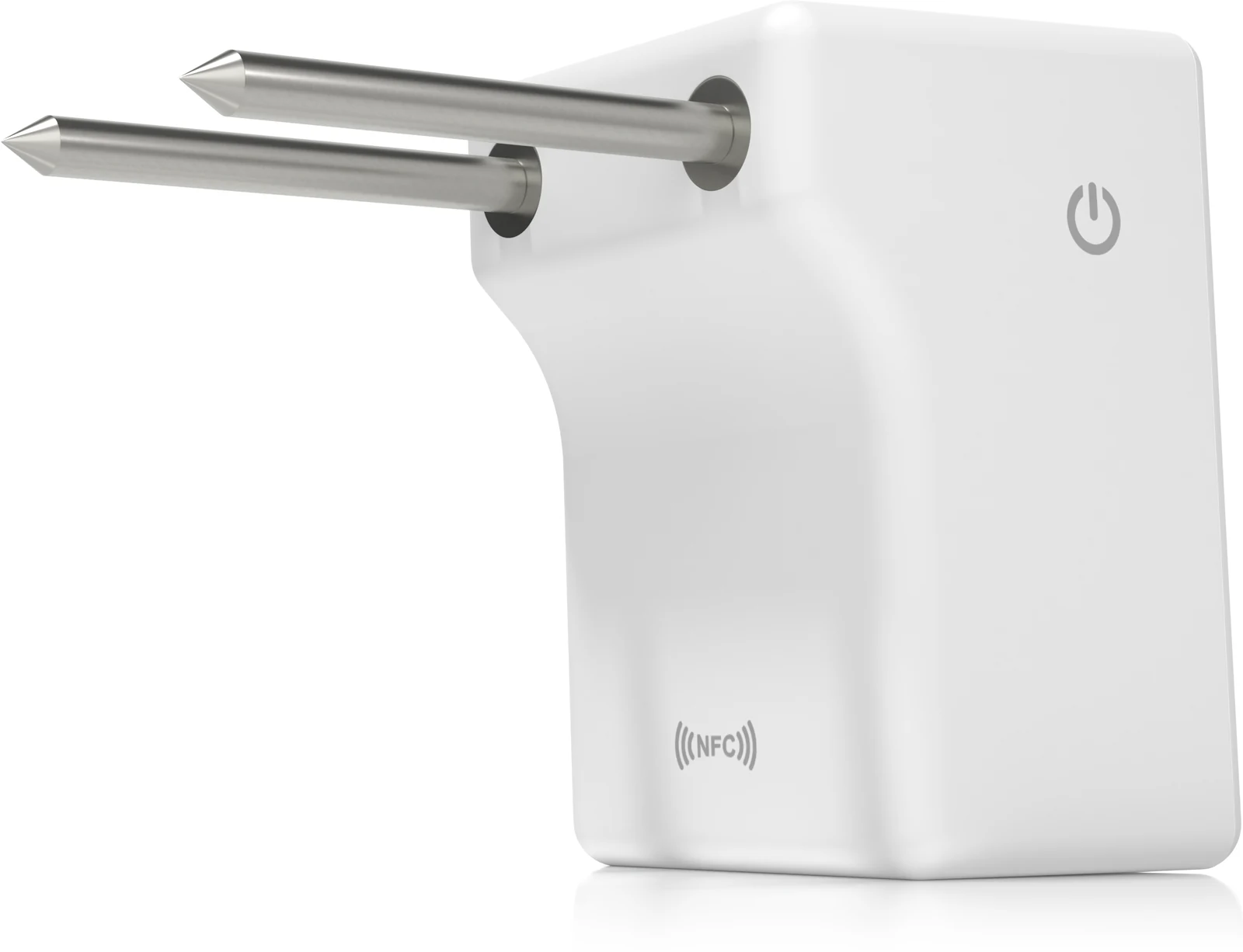 Loading 3D sensor model
Trusted by organisations across sport, education, local government and property








The operational problem
Spot checks show one place at one moment. Conditions can change across a site before the next inspection or scheduled irrigation cycle.
Without ongoing root-level visibility, wet areas, dry areas and changing conditions can be difficult to identify early.
Repeated site checks take time and still provide only a snapshot, making it harder to prioritise the areas that need attention.
Different industries, shared visibility problems
See how root-level measurements inform decisions from golf greens to green roofs.
Compare root-level conditions across monitored growing areas and respond where attention is needed.
Explore Agriculture → GolfFind moisture differences across greens, tees and fairways before they become harder to manage.
Explore Golf → Sports FieldsSee changing root-level conditions across stadiums and training grounds between inspections.
Explore Sports Fields → RacecoursesGive track teams more evidence when planning irrigation and preparation.
Explore Racecourses → Green CitiesMonitor difficult-to-access growing areas and identify unnecessary watering.
Explore Green Cities → LandscapingGive crews and property managers a clearer view across monitored commercial sites.
Explore Landscaping →From blind spots to informed action
Hydrosight combines root-level monitoring, weather context, compatible irrigation controls and reporting in one platform.
Compare moisture, EC and temperature readings from selected root areas.
View observations and forecasts beside soil measurements before irrigation runs.
Connect selected Rain Bird and Hunter Hydrawise systems without replacing the whole irrigation system.
Reduce or disable selected Rain Bird runtimes, or skip a Hunter Hydrawise scheduled run when soil is already wet.
Configure soil-moisture threshold alerts and notify users about irrigation actions.
Record whether compatible irrigation ran, was skipped or was reduced, including saved runtime.
Evidence from the root area
A single probe reports three root-level measurements wirelessly to the Hydrosight Portal.
Moisture (%)Volumetric water content at the installed probe depth.
EC (dS/m)Electrical conductivity readings that help identify changing soil conditions.
Temperature (°C)Soil temperature at probe depth for germination and growth monitoring.
Inside the Hydrosight Portal
Go ahead, explore it. Every rise and fall below is real data from a Hydrosight sensor in Australia, revealed through the same Portal customers use to understand what is happening beneath the surface.
THE PORTAL, WHERE YOU NEED IT
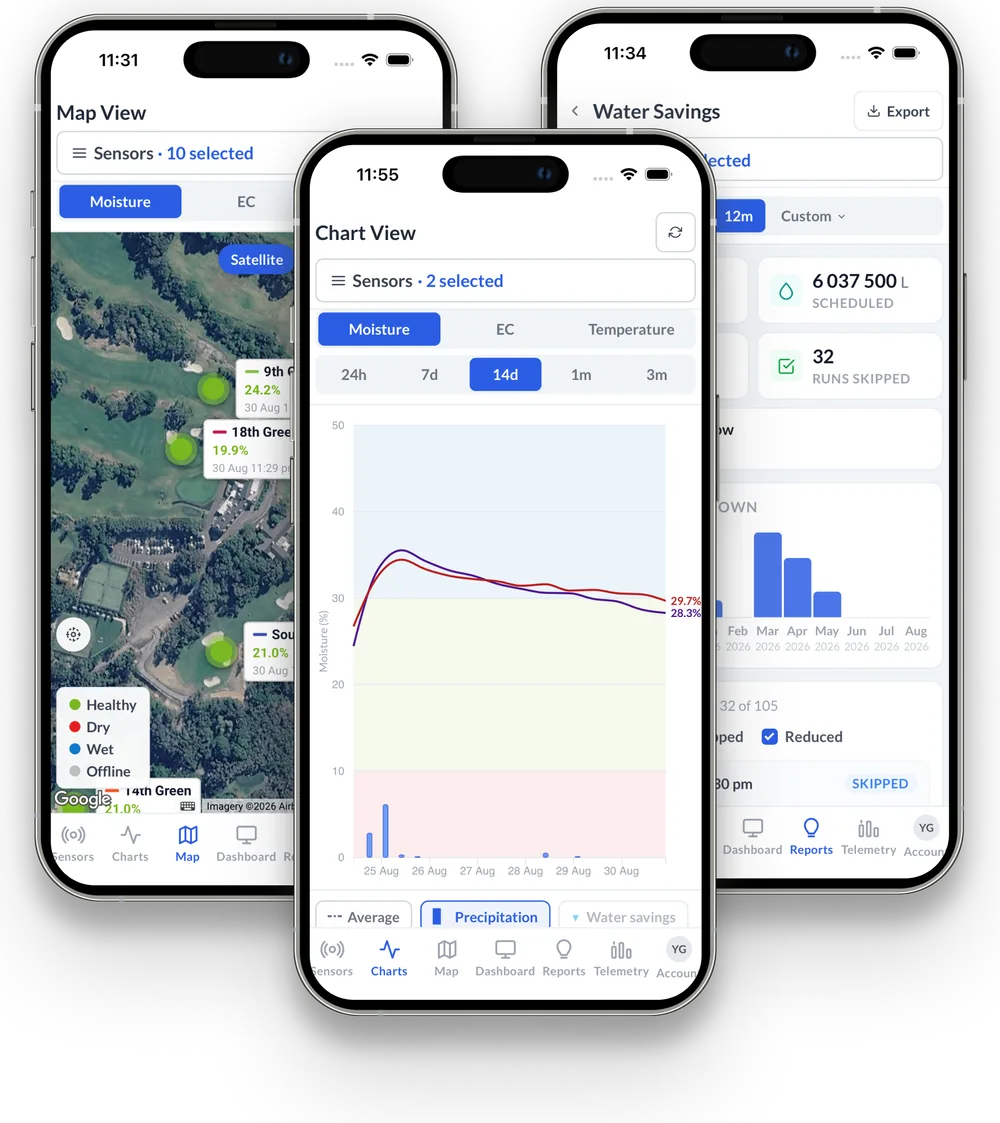
Use Hydrosight on your phone or tablet to open the site map, compare current soil and weather trends, and review irrigation outcomes while you are on site. Your team sees the same picture without waiting to get back to a desk.
Choose where visibility matters, install at root level, then follow changing conditions in the Portal.
Start with the areas that are hardest to inspect, irrigate or keep consistent.
Make a hole with a standard hole cutter, lower the sensor into it, slide the probes sideways into undisturbed soil, then plug the hole so the installation is fully underground.
Use moisture, EC and temperature trends in the Portal to decide where to inspect, irrigate or adjust management.
Practical answers about installation, connectivity, the Portal and getting started.
Make a hole with a standard hole cutter, lower the sensor into it, slide the probes sideways into undisturbed soil, and plug the hole. The complete IP68-rated sensor remains below the surface.
Install it around the active root system. For typical turf, this is usually about 5-8 cm below the surface. Other applications may require shallower or deeper placement depending on what needs to be measured.
Yes. The sensor can be repositioned whenever your monitoring needs change.
No. Each sensor sends readings directly over NB-IoT, subject to confirmed coverage at the installation location.
Selected Rain Bird and Hunter Hydrawise systems are supported. Share your controller model and site setup with us so we can confirm compatibility and available automation before deployment.
Battery life is typically 3-5 years, depending on reporting frequency and network conditions. Battery replacement is included in the package, so Hydrosight will provide a new replacement sensor at no additional cost when replacement is due.
Tell us what would make Hydrosight more useful for you. We value customer feedback and, when a request makes the product better, we do our best to implement it.
Yes. Start with the area that is hardest to inspect or manage. We agree the measurement question, sensor placement, trial period and success criteria before installation so the result can be evaluated clearly.
Hydrosight combines sensor hardware, cellular connectivity and Portal access. Pricing and any ongoing service costs are set out clearly in a site-specific proposal.
Identify the hardest area to inspect. Hydrosight can help define the sensors, trial question and success check for a focused site trial.